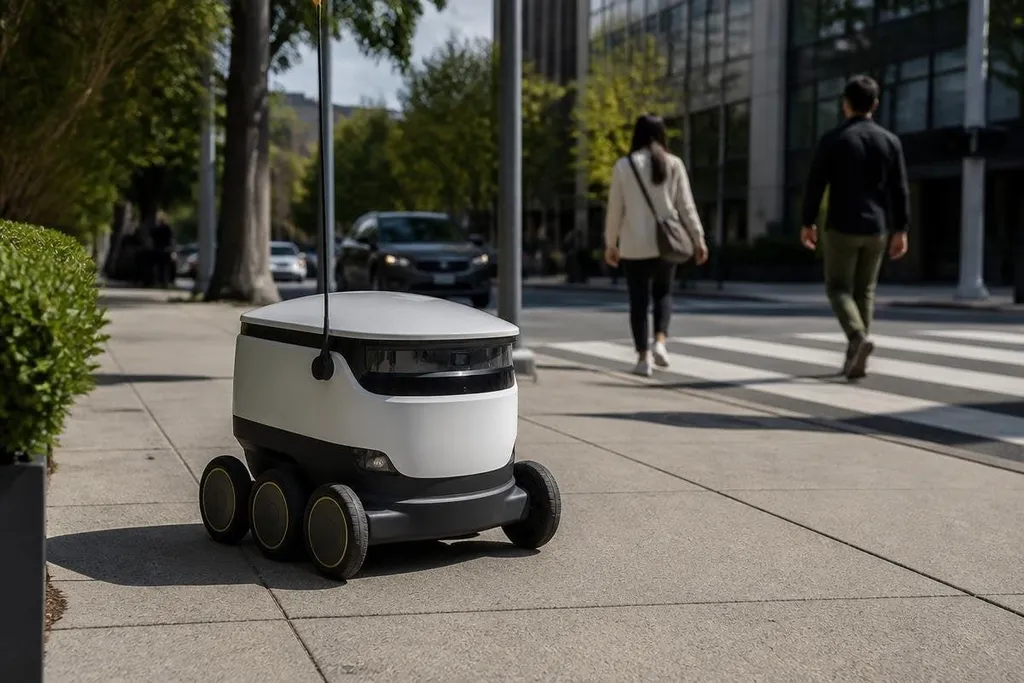
A city robot won’t need a human shape to earn its place on the street. The first useful systems will likely handle fixed tasks such as delivery, inspection, cleaning, and traffic checks, where routes and rules can be tightly controlled.
If you’re planning automation for a city service, the main question is practical: can the robot work safely around people, weather, vehicles, and damaged roads?
Quick read
- Delivery robots fit short routes with known drop-off points.
- Inspection drones can check bridges, roofs, and power lines without sending a person into the work area.
- Public trust will depend on clear rules, visible safety systems, and human help when the robot fails.
The first jobs will be narrow
A robot that does one job on a known route has a simpler problem than a robot asked to handle an entire city. A sidewalk delivery robot can map its route, set speed limits, and stop when its sensors detect a person or blocked path.
That narrow scope also makes testing easier. Operators can check the same route in daylight, rain, and low light, then record where the system stops or asks for help. The result is useful only if the city knows how often those stops happen and who responds.
Street cleaning offers a similar path. A machine can follow marked lanes, avoid parked vehicles, and return to a charging point when its battery runs low. It still needs a human plan for broken glass, roadworks, crowds, and objects that its camera cannot identify.
Sensors matter more than the shape
Smart city robots will rely on a mix of cameras, LiDAR, GPS, and wheel or motor sensors. LiDAR measures distance with laser pulses, giving the robot a map of nearby objects.
GPS helps with location outdoors, while motor sensors show whether the wheels or arms moved as planned. No single sensor works well in every street. Tall buildings can weaken GPS signals. Rain can affect cameras and LiDAR. A parked truck can block a route that was clear when the map was made.
The robot needs a safe response for each case. That might mean stopping, taking a marked detour, or sending the task to a remote operator. A remote operator can guide the robot through an unusual event, but a city still needs limits on how many machines one person can supervise.
Public space adds hard rules
A private warehouse can control who enters and where machines travel. A public sidewalk cannot. People may cross the robot’s path without warning, push it, block it, or mistake its lights and sounds for something else.
That makes the safety case part of the product. A city contract should state the robot’s top speed, stopping distance, operating hours, weather limits, data storage period, and process for reporting a fault.
The same care applies to drones. A drone checking a bridge can collect useful images, but the operator must manage flight zones, privacy, battery limits, and the risk of losing a connection. A camera pointed at public space creates a data question even when the inspection task is valid.
That privacy question sits beside the business case. Robot24.com's smart city robotics coverage can tie each system to its task, operating cost, safety rules, and need for human oversight. Those facts decide whether a city keeps a robot after the trial ends.
The business case will decide what stays
City robots cost more than the machine itself. A buyer also pays for mapping, software, fleet control, charging, repairs, insurance, staff training, and remote support. A low purchase price can lose its appeal if the robot needs frequent human help.
The useful measure is the completed task. For a delivery robot, that could mean successful trips per shift. For an inspection drone, it could mean the number of usable images collected before a battery change. For a cleaning machine, it could mean clean road length per operating hour.
I’d put money into narrow city robots before humanoid machines, because fixed routes make safety checks and service costs easier to measure. That view can change when a general-purpose robot proves it can work for a full shift without close human control.
A buying checklist for city teams
Before approving a pilot, check these points:
- Define the route: mark streets, crossings, restricted areas, and places where the robot must stop.
- Set the limits: record speed, weather, battery range, stopping distance, and operating hours.
- Plan human help: name the remote operator, response time, and handoff process for blocked routes.
- Test public contact: check how the robot reacts when people approach, touch, or surround it.
- Measure completed work: count finished deliveries, usable inspection images, or cleaned distance.
- Publish the data rule: state what cameras collect, where files are kept, and when they are deleted.
The next phase of smart city robotics will be judged in ordinary conditions: a blocked sidewalk, a weak GPS signal, a wet camera, or a battery that runs low before the route ends. Cities that can measure those failures will know which robots deserve a wider route.